
Still no decisive ban on round log export
Post Courier | Editorial
We are enlightened by the forest canopy, and so we take the announcement by the Papua New Guinea Forest Authority to ban round log exports this year with great unease.
Why? Because we have heard this before. We heard it from Prime Minister James Marape last year. We heard it from others even before James Marape declared a total ban on round logs export.
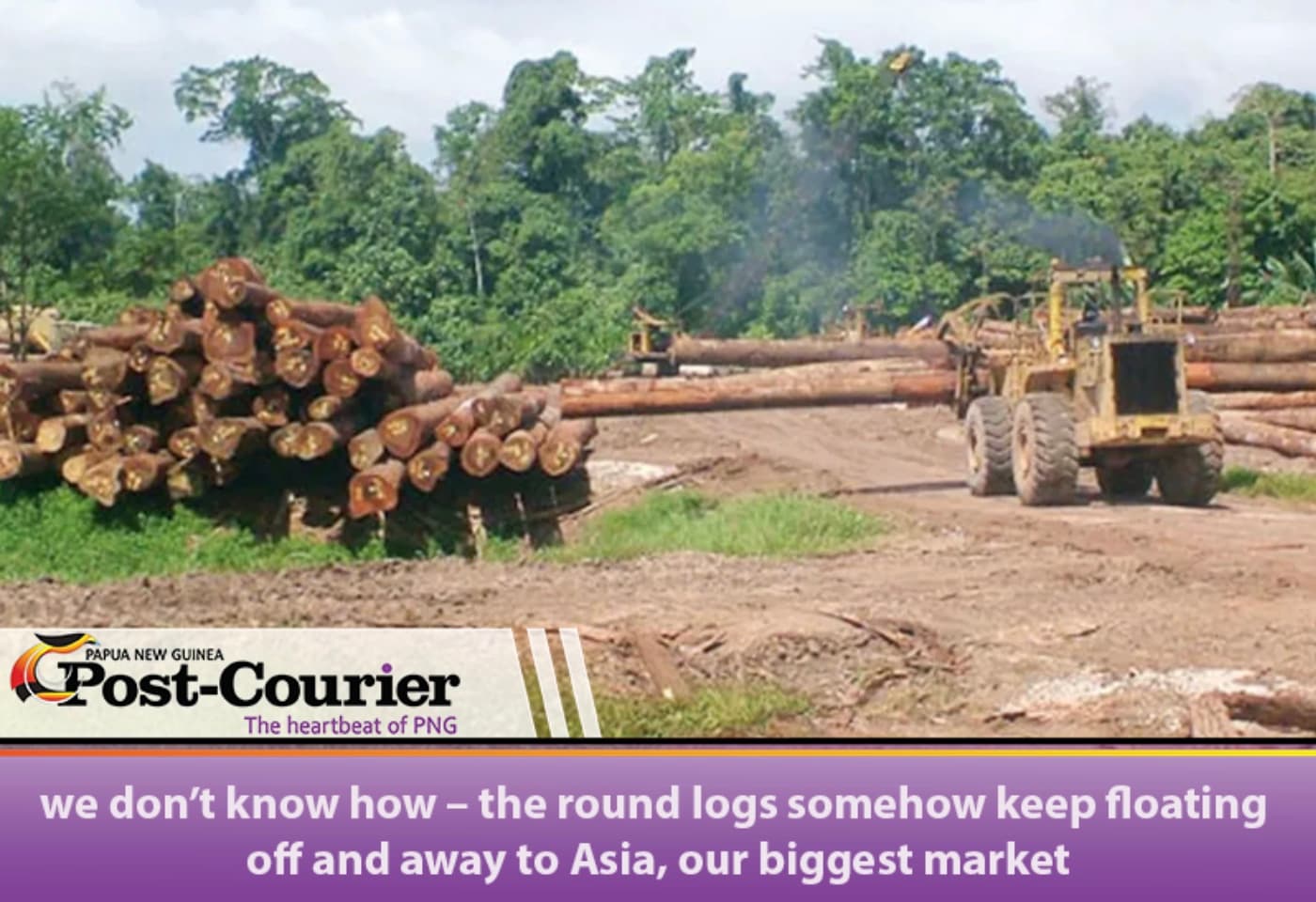
And for a variety of reasons – we don’t know how – the round logs somehow keep floating off and away to Asia, our biggest market.
Logging is the most controversial industry in our country. Foreign loggers employing highly unsustainable logging and unscrupulous practices have decimated large swathes of our pristine forests, creating an environmental disaster.
Vast communities lose their forests. They lose their land, rivers, creeks and identities for no gain at all.
Yet year after year, under past successive governments, millions of cubic metres of logs – many undeclared – leave our shores.
In 1990, former forests minister Karl Stack decided it was time to place a moratorium on round logs going out of the country. Nothing happened.
In 2009, Chief Sir Michael Somare, under his Vision 2050 policy, supported an end to licensing round log exports. Nothing happened.
Last year, Marape said NO MORE round log exports. Nothing happened.
This week, the PNGFA woke up from its slumber, using Biblical texts, to say that round logs will be completely stopped by the end of 2026.
All these stretch the imagination and make our lumber tremble. Deadline after deadline, while loggers chop, cut at a frantic pace.
Now that 2025 is history, let’s explore some of the ideas that Marape promised.
The focus on downstream processing is a nice way of saying ‘enough of stealing our logs’ just like you have been preying on our fish.
Sadly, there are no factories for downstream processing, so how will this belief eventuate into tangible benefits for PNG? The Government wants to establish another SOE, PNG Diwai, to take 30 per cent of harvested logs for domestic processing. The question is, where does the 70 per cent go?