
New Ireland coastal waters causing fish deaths, human sickness
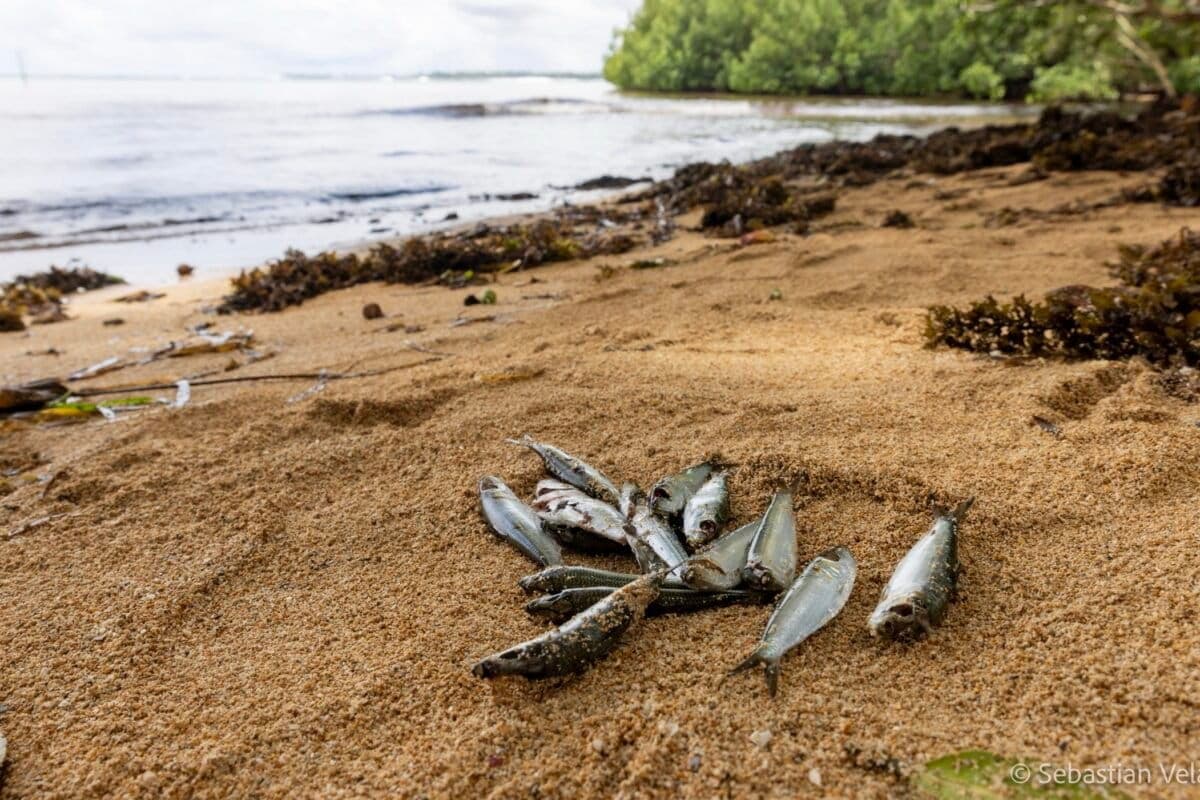
Fish on a beach in New Ireland Province. Image Sebastian Velasquez
- Communities on the east coast of Papua New Guinea’s New Ireland province report that contact with the seawater there has made people sick since December 2025; residents have also reported spikes in the number of dead fish and other marine life along the shoreline.
- A group of local and international NGOs has responded, providing help with sampling to determine the cause and raising money for the affected villages.
- New Ireland’s coastal communities depend on the sea for food, but government officials have warned against eating fish until the cause of the problems has been identified.
- Government ministries have been aware of the situation for at least two months, and while leaders say that tissue, water and soil samples have been collected, no results have been released yet.
For several months, the waters around New Ireland province in Papua New Guinea have been causing illness, skin irritation and the death of sea life, according to communities living along the east coast of the island.
In December 2025, residents say they began noticing that fish and other marine life were turning up dead along the shoreline, according to a coalition that is organizing a relief effort. John Aini, the founder of the Indigenous marine conservation organization Ailan Awareness, who is from New Ireland province, said the flesh of these fish was discolored, the eyes of some had popped out of their sockets and others had visible damage to their brains.
New Ireland sits along the northeastern fringes of Papua New Guinea between the Bismarck Sea to the west and the expanse of the Pacific Ocean to the east. The crisis threatens “multiple” communities whose cultures are deeply entwined with the ocean environment, according to a statement from the coalition, and some 750 people have experienced symptoms including burns, respiratory problems and gastrointestinal sickness. Tidal movements also threaten to infiltrate and foul freshwater creeks that are critical sources of drinking water. And yet, the origins of the crisis are a mystery.
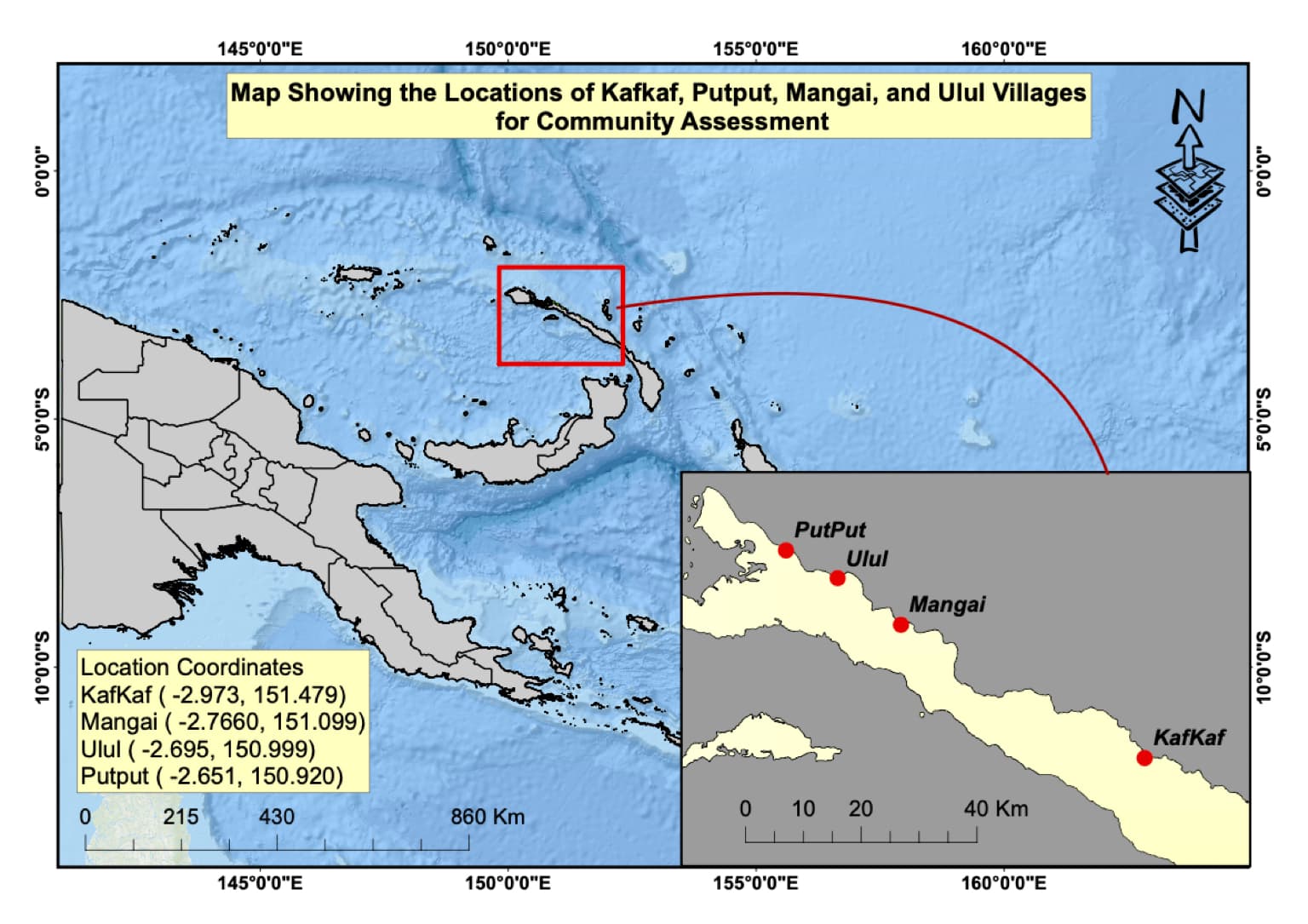
A map showing the locations of the most affected communities in New Ireland. Image courtesy of Ailan Awareness.
“Families can no longer rely on the ocean for food,” Martha Piwas, a community leader from the east coast of New Ireland, said in the statement. “Mothers cannot feed their children fish anymore. People are getting sick. And we still don’t know why.”
John Aini told Mongabay that the people are frustrated by the lack of an official response to the situation.
“We rely on coral reefs to sustain our daily livelihoods,” he said in a March 12 WhatsApp message. “The government has literally said nothing.”
After local residents first began noticing an uptick in fish deaths, Ailan Awareness conducted a five-day survey of affected communities and their coastal waters, reefs and seagrass beds. The effort turned up more than 3,400 dead marine animals representing at least 15 species. Most of the fish found were bluestripe herring (Herklotsichthys quadrimaculatus), which plies nearshore reefs by day and then schools in deeper open water by night. Experts convened by the response coalition are using these clues to help determine the still-elusive cause of the problem.
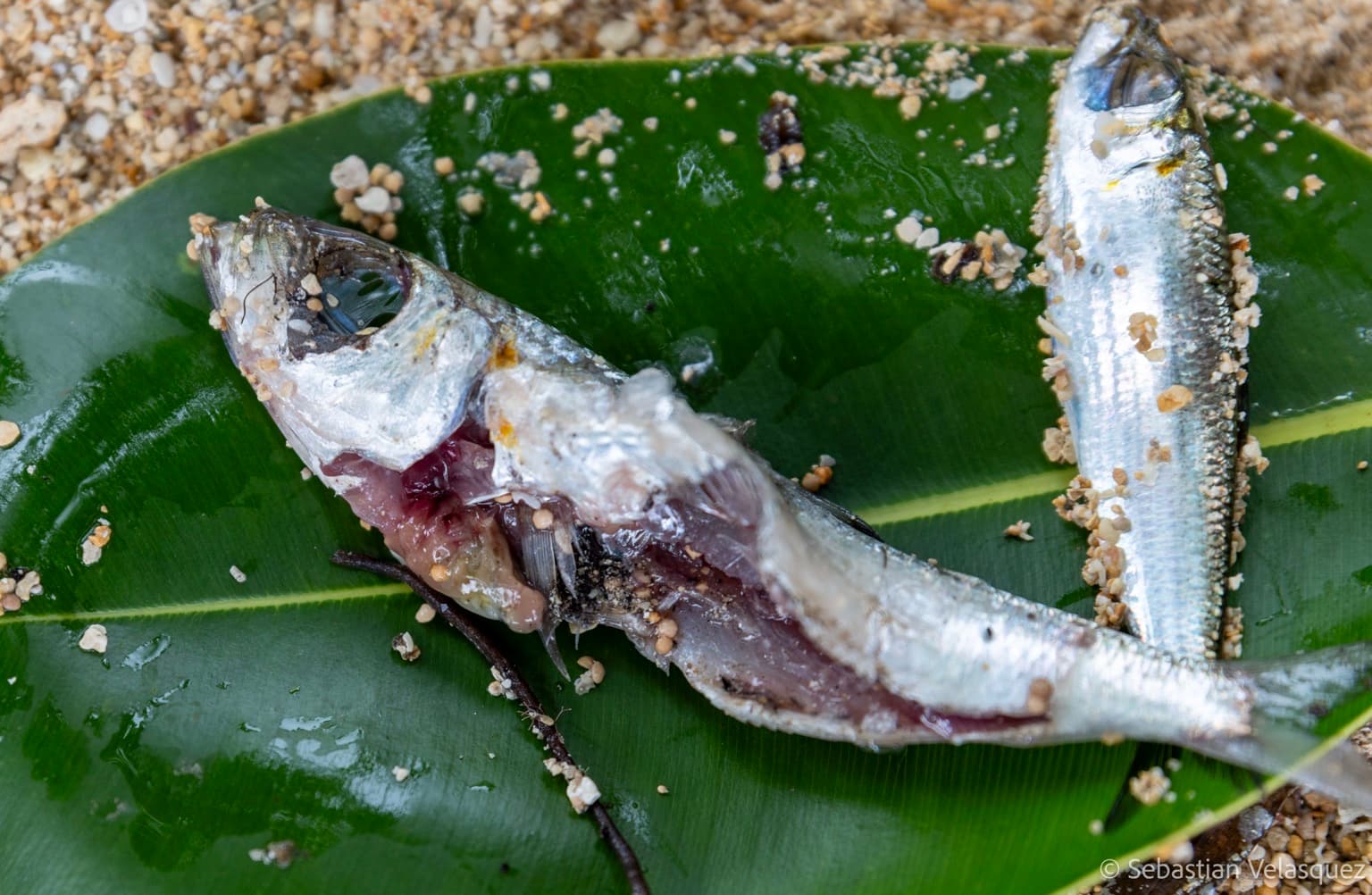
Some fish have turned up with discolored flesh. Government authorities have warned New Irelanders not to eat fish from the island’s east coast until the cause of the problems can be identified. Image ©Sebastian Velasquez.
The coalition has contacted experts in environmental toxicology to understand what may be causing harm to people and sea life. They have identified several possible causes: Toxins could come from contaminants from mining or agriculture, harmful algal blooms typically triggered by high nutrient loads and warm sea temperatures or compounds released by geothermal activity on the seafloor. New Ireland lies along a hotbed of seismic activity called the Pacific Ocean’s “Ring of Fire,” which is home to most of the world’s active volcanoes.
Mongabay’s requests for comment from the managing director, the executive director and technical officers of the country’s Conservation and Environment Protection Authority (CEPA) have gone unanswered. In recent days, however, responses to the crisis have begun to trickle from the country’s Parliament.
The National, a PNG-based newspaper, reported on March 19 that CEPA had collected water, fish tissue and soil samples from six villages in the district of Kavieng, according to CEPA managing director Jude Tukuliya, who said results should be available “this week.” (As of publication, no results had been made public.)
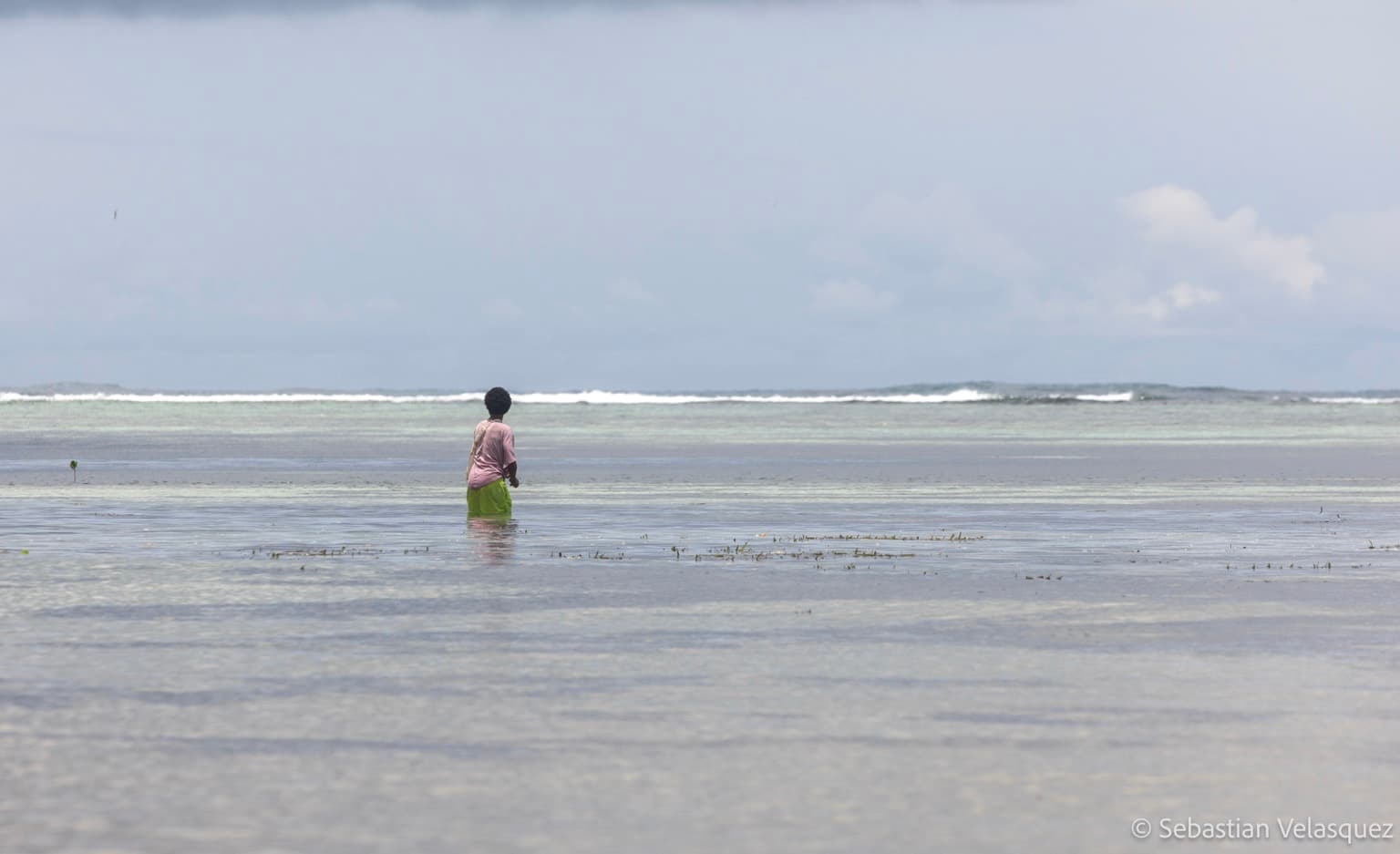
Coastal communities see the reefs and nearshore waters as gardens that sustain them. Image ©Sebastian Velasquez.
A video posted March 17 by the news source Pulse of PNG shows New Ireland Governor Byron Chan in Parliament asking Jelta Wong, PNG’s minister for fisheries and marine resources, about the government’s response to the crisis.
Wong confirmed that his office had learned about the issue “about two months ago” and said that the fisheries department is working with the health and environment ministries on “a joint response operation.”
“We hope to come up with a solution within the next week,” he said. Wong also said New Irelanders shouldn’t eat fish from the affected waters. He added that tests were underway to determine whether agricultural chemicals might be playing a role.
Oil palm agriculture blankets thousands of hectares of New Ireland’s land, maintained by both smallholder farmers and the company New Britain Palm Oil, a subsidiary of the Malaysia-based conglomerate Sime Darby Berhad.
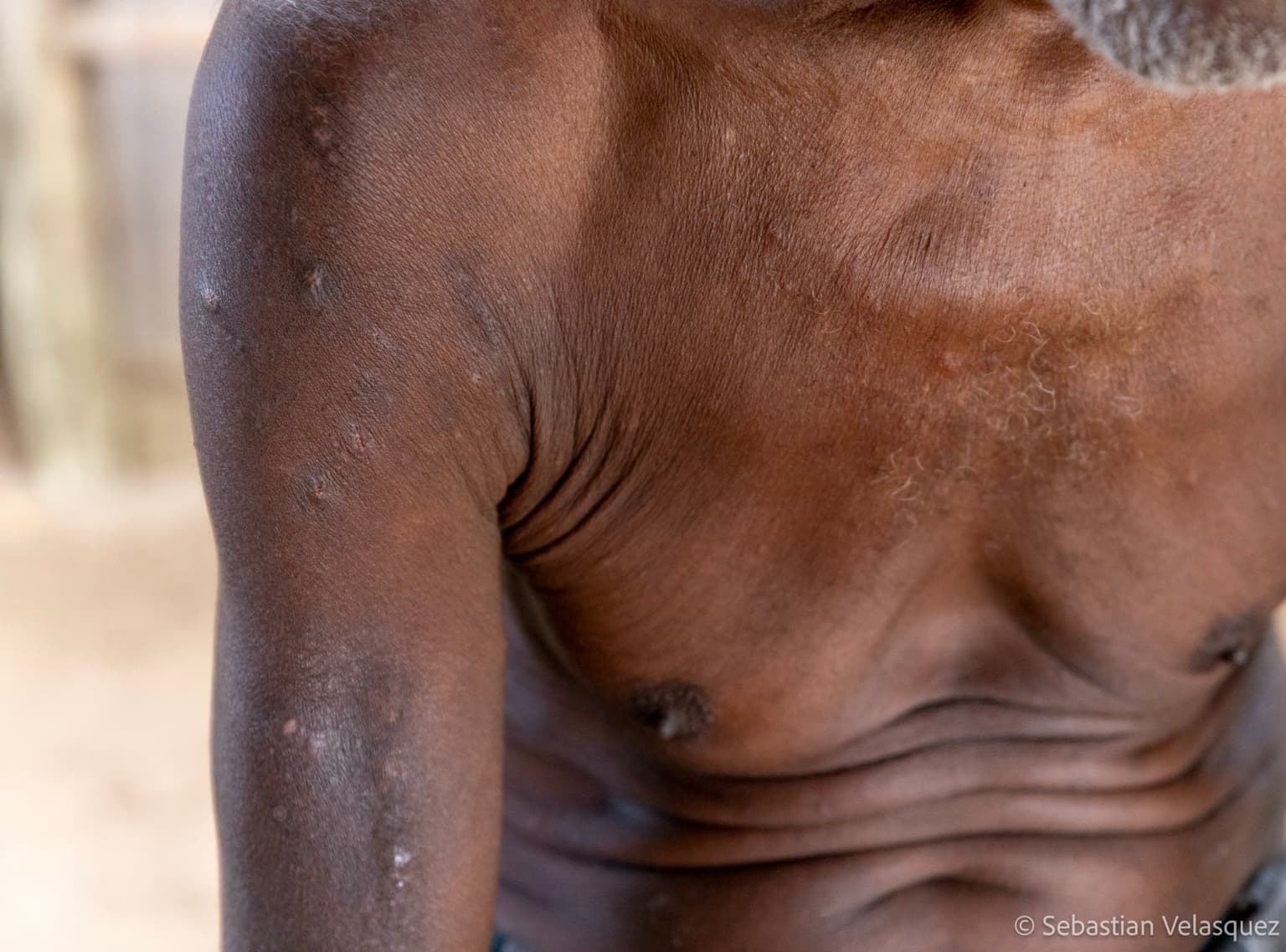
Skin irritations reportedly caused by recent contact with the waters off New Ireland’s east coast. Image ©Sebastian Velasquez.
One theory being considered by experts consulted by the response coalition is that algae may be tainting coastal waters. Algae from the genus Ostreopsis, for example, produce harmful toxins that may cause nausea, respiratory distress and skin irritation. Research in the Mediterranean Sea has linked blooms of toxin-releasing algal blooms to higher seawater temperatures, which stem predominantly from global climate change. Other studies have turned up correlations with higher concentrations of nitrogen and phosphorus found in wastewater and agricultural runoff, though scientists caution that the role of nutrient loads in stimulating algal toxin production “is a complex, not very well understood process.”
The offshore waters of New Ireland are also the potential site of deep-sea mining for minerals including copper, gold and silver. For nearly two decades, opponents of the Solwara 1 mine have questioned whether the still-nascent methods for extracting these minerals are safe for sea life, ecosystems and coastal human communities. In 2024, journalists found that a foreign company had been probing the seafloor for minerals under an exploratory mining license off the west coast of New Ireland, apparently without the knowledge of key mining authorities in PNG. Less than a year later, in June 2025, James Marape, PNG’s prime minister, told Mongabay he did not support deep-sea mining.
Currently, there is no evidence of a connection between deep-sea mining and the ongoing problems facing New Ireland’s east coast, and sources from the west coast say communities there haven’t been affected.
Without adequate testing — and the results of that testing — the sources of contaminants in New Ireland’s coastal waters threatening human health, food security and ecosystems remain unknown, the response coalition says. On March 12, the group started a GoFundMe campaign to support the response. The environment-focused organization InnerLight agreed to match the first $5,000 collected. As of March 20, donors have pledged nearly $7,000.
More than 1,500 people living in the most impacted villages need food, clean drinking water, and medications, and the response team wants to conduct more water and sediment testing, said InnerLight’s founder and CEO, Bodhi Patil.
“We need long-term solutions,” Patil told Mongabay via WhatsApp. Still, he added, “I believe that for now, the biggest solution is hope for the people most affected.”
John Cannon is a staff features writer with Mongabay. Find him on Bluesky and LinkedIn.
Citations:
Paradis, C., Chomérat, N., Vaucel, J.-A., Antajan, E., Labes, P., Rappoport, M., & Labadie, M. (2024). Impacts on Human Health Potentially Caused by Exposure to an Unprecedented Ostreopsis spp Bloom in the Bay of Biscay, French Basque Coast. Wilderness & Environmental Medicine, 35(1), 13-21. doi:10.1177/10806032231220405
Sadorge, S., Morère, M., Jauzein, C., Ternon, E., & Monperrus, M. (2026). Ostreopsis blooms promote production of volatile organic sulfur compounds: environmental and health implications. Environmental Pollution, 396, 127853. doi:10.1016/j.envpol.2026.127853
Cohu, S., Mangialajo, L., Thibaut, T., Blanfuné, A., Marro, S., & Lemée, R. (2013). Proliferation of the toxic dinoflagellate Ostreopsis cf. ovata in relation to depth, biotic substrate and environmental factors in the North West Mediterranean Sea. Harmful Algae, 24, 32-44. doi:10.1016/j.hal.2013.01.002
Medina-Pérez, N. I., Cerdán-García, E., Rubió, F., Viure, L., Estrada, M., Moyano, E., & Berdalet, E. (2023). Progress on the Link between Nutrient Availability and Toxin Production by Ostreopsis cf. ovata: Field and Laboratory Experiments. Toxins (Basel), 15(3), 188. doi:10.3390/toxins15030188