
Who's monitoring the social impacts of PNG's mining industry?
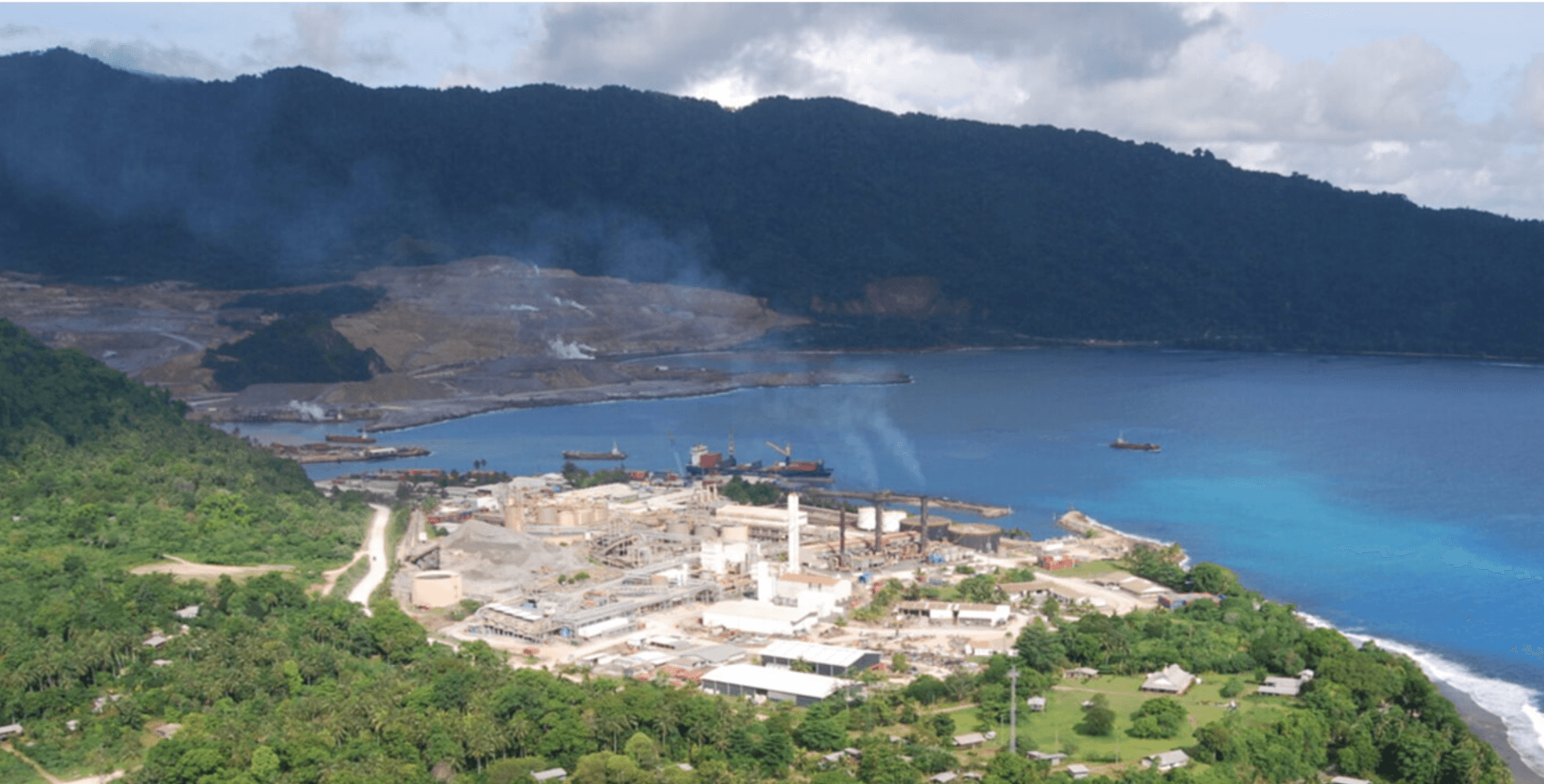
Lihir gold mine on Aniolam Island in Papua New Guinea’s New Ireland Province (Nick Bainton)
At investor forums and industry conferences, Papua New Guinea’s mining industry is routinely presented as a pillar of national development. Events like the upcoming PNG Investment Week, PNG Expo and PNG Resources Week, provide platforms to highlight revenue, jobs, infrastructure and social development.
Companies tout their environmental, social and governance (ESG) credentials and their contribution to the nation.
But a more basic question is rarely asked: what evidence supports these claims? Who is actually monitoring the social impacts of mining projects – and why does it matter?
Monitoring is not simply about collecting data.
It shapes how impacts are understood, measured and managed.
It determines whose grievances are recognised and whether harm is prevented or merely recorded.
Communities living around projects like Porgera and Ok Tedi know that conflict, inequality and environmental damage remain stubborn features of the sector.
PNG has never lacked ideas about how to manage these impacts.
What it has struggled to sustain is the institutional capacity to monitor and govern them at a scale commensurate with the industry itself.
Nearly three decades ago, Australian National University (ANU) anthropologist Colin Filer warned that “social impact mitigation strategies can only be successful if government agencies and mining companies agree to sustain the general institutional framework within which such strategies can be pursued”.
That warning has aged uncomfortably well.
In the years after independence, PNG adopted a regulatory framework that distinguished between environmental impacts and broader social and economic impacts.
Environmental impacts were assessed through environmental impact statements funded by project developers under a “user pays” principle.
Social and economic impacts, however, remained under direct government oversight, typically assessed through interdepartmental committees involving several state agencies alongside the developer.
While companies funded environmental studies, the state retained responsibility for evaluating social and economic consequences.
This institutional balance shifted after the Bougainville rebellion erupted in 1988 around the Panguna copper mine.
In response, the government introduced the development forum – a mechanism through which national and provincial governments, landowners and project developers negotiated benefit-sharing arrangements.
While development forums helped address the political problem of benefit distribution, they also marked a major shift in how mining impacts were governed.
Responsibility for assessing and monitoring social impacts increasingly moved toward project developers themselves, as government officials recognised that the state could no longer sustain comprehensive oversight of both environmental and social impacts.
Today, project proponents spend vast sums producing environmental impact statements that include social impact studies.
But the government agency responsible for evaluating these documents – now the Conservation and Environment Protection Authority – has limited capacity to verify whether commitments are actually implemented.
The result is a system that generates extensive documentation but has relatively weak follow-through.
Reports are reviewed, but the resources required to ensure monitoring and mitigation commitments are carried out remain inadequate.
Much of the work involved in assessing social impacts has been outsourced to consultancy firms engaged by mining companies.
In practice, social impact assessment (Sia) now functions less as a public governance tool and more as a compliance requirement for project approval.
As I have recently shown, the commercial determinants of the Sia process directly influence how impacts are described, which risks are accorded priority and what mitigation measures are proposed.
As Filer once told me, he who pays the piper calls the tune.
The risk is structural. When monitoring is conducted by consultants working for industry, incentives favour demonstrating compliance rather than critically assessing broader social consequences.
In the early 2000s, hopes were briefly raised that this imbalance might be corrected.
Riding the momentum of the global Mining, Minerals and Sustainable Development project, the World Bank supported an effort to rethink how mining might contribute to sustainable development in PNG.
The result was the 2003 Sustainable Development Policy and Sustainability Planning Framework for the Mining Sector – the so-called Green Paper.
It acknowledged that mining dominated the national economy, but had not delivered broad-based development and recognised deep failures in how social impacts were understood and managed.
Its core message was clear: social impacts could not be left to company discretion. They required stronger state capacity and coordination across the mining lifecycle.
There were reforms. The Mineral Resources Authority, established in 2005, consolidated regulatory functions.
But it was separated from the Department of Mineral Policy at the same time, creating a gap between policymakers and policy managers.
Guidelines on mine closure and involuntary resettlement sought to address some of the most contentious social issues.
These steps reflected growing recognition of the impacts of mining.
But institutional capacity to monitor and manage those impacts has not kept pace with the scale and complexity of the sector.
At the same time, independent research on mining’s social impacts has dwindled.
Since the opening of the Panguna mine in the early 1970s, anthropologists, economists and geographers have conducted long-term research around mines such as Misima, Ok Tedi, Porgera and Lihir.
Universities and policy research institutions – including the Institute of Applied Social and Economic Research, the precursor to the National Research Institute – produced analysis that fed directly into national debates on resource governance.
The ANU played a central role in this ecosystem.
Over the past two decades that ecosystem has contracted.
Research priorities have shifted, access to project areas has become more restricted and long-term fieldwork has become harder to sustain. Mining, as Chris Ballard and Glenn Banks famously quipped, is no ethnographic playground.
Demand for social research has not disappeared – it has shifted into consultancy work, often conducted under tight timelines and within constrained project frameworks. Some studies are led by highly capable social researchers, others much less so.
Two consequences follow.
First, consultancy work appears to have largely replaced long-term independent research, reducing continuity and the ability to track impacts over time.
Second, much of the resulting knowledge does not circulate publicly. Reports prepared for regulatory approval or internal company use are often difficult to access.
The issue is not simply research quality. It is control.
When evidence about mining’s impacts is privately commissioned and privately held, policymakers, researchers and communities have fewer opportunities to interrogate the evidence base.
This constrains evidence-based policymaking and weakens public scrutiny.
PNG has reaffirmed its commitment to mining-led development. New projects like Frieda River, Wafi Golpu and the reopening of the Misima mine will generate increasingly complex social outcomes.
Without stronger public capacity to monitor and manage social impacts, ambitious policy frameworks risk being implemented through compliance-driven processes rather than sustained oversight.
The problem is not a lack of governance instruments. Nor is it a lack of capable consultants in PNG.
It is that the institutional capacity required for independent monitoring and public accountability has not expanded at the same pace as the industry itself.
Consultancy firms have stepped into this space – but they work for industry, not for the state.
Until that imbalance changes, the question remains: when mining companies claim social benefits, who is actually in a position to verify them? – Devpolicy Blog
Nick Bainton is a professor in the Australian National University School of Regulation and Global Governance (RegNet), where he leads the Extractive Systems Laboratory which examines the planetary pressures and future trajectories of resource extraction in an overheated world.