
What's in a bilum?: PNG's iconic string bag
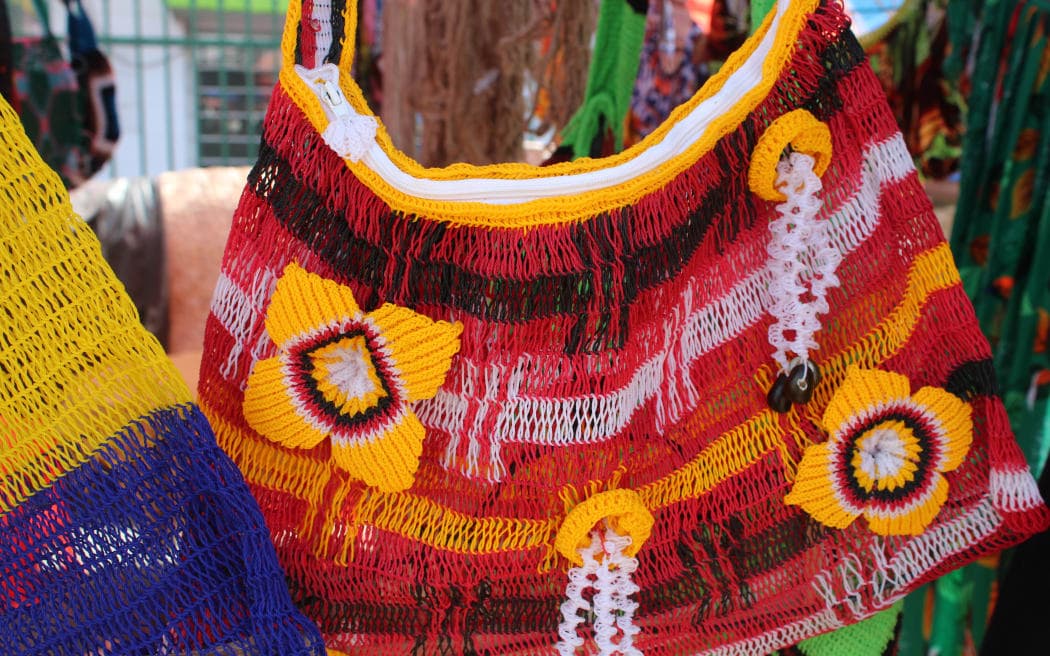
Synthetic wool and plastic have replaced plant fibre material in many Papua New Guinea cultures but the art of bilum making remains as vibrant as ever. Photo: RNZ Pacific/Scott Waide
First Person - What's in a bilum? The string bag carrying Papua New Guinea's names, rules, and memory
In Papua New Guinea, the bilum is among the most familiar objects of daily life.
It is carried through markets and villages, classrooms and hospitals, offices and homes - holding food, clothes, books, and babies. Its presence is so constant it is often taken for granted.
Yet the bilum is more than a container.
Across the country's hundreds of cultures and language groups, it functions as a system of knowledge - conveying social roles, responsibility, and belonging through form, name, and use.
Understanding a bilum means understanding how it should be carried, what it should contain, and who is entitled to use it.
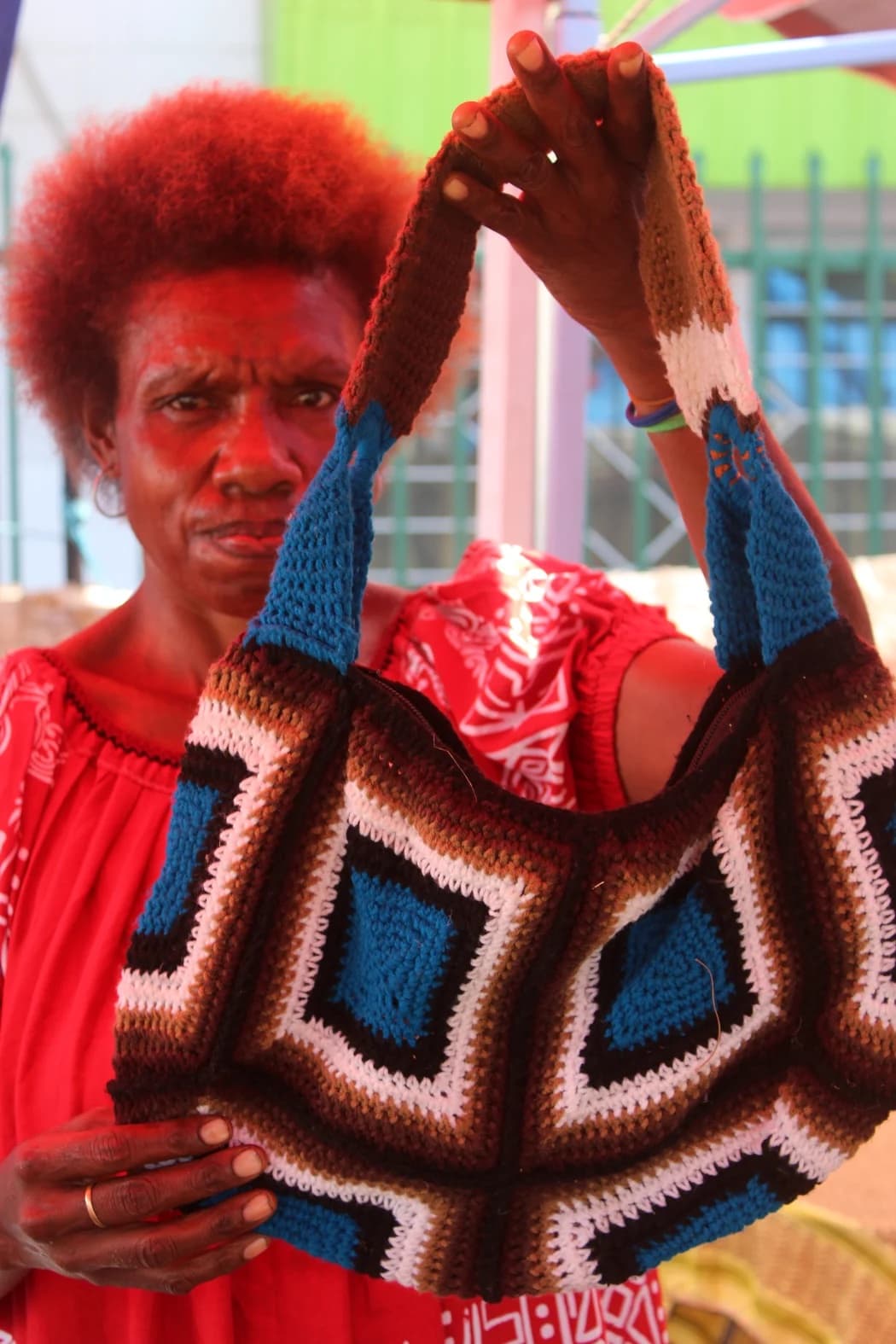
Synthetic wool and plastic have replaced plant fibre in many cultures, but the art of bium making remain as vibrant as ever. Photo: RNZ Pacific / Scott Waide
Naming as knowledge
Throughout Papua New Guinea, bilums are named according to purpose, life stage, and social expectation. These names act as instruction rather than ornament, communicating boundaries that are widely understood without explanation.
For Serah Tahu, whose parents come from different cultural backgrounds, bilums offer a direct connection to ancestral knowledge through language.
"In my mother's Melpa language from Western Highlands, the bilum is generally called wal," she says. "A bilum for carrying babies is called omb wal. Mothers place small pandanus mats, known as kunung, inside so babies can sleep."
Other bilums mark transitions in a woman's life.
"For a young bride or a young girl, a special bilum called wal kupun symbolises womanhood. It is woven in beautiful colours, representing the resources and wealth of her clan."
In Melpa culture, design carries memory.
Pig-skin patterns reference participation in moka ceremonies.
Snake-like lines trace rivers and travel routes.
Diamond shapes recall courtship during singsing gatherings.
Men's bilum hats are known as wuna, while long ceremonial bilums worn in front are called bal.
Function before form
In Simbu Province, classification centres on use rather than appearance. In the Kuman language, Grace Konia explains that gagl is the general term for bilum, with meaning shaped by function.
"Gagl gaundo is a large food bilum. Gagl kamban is for everyday personal use. Ga kukambo gagl is for infants, and gagl kondai is worn by men during singsing."
Technique further distinguishes meaning. Simple looping (gagl bu prak) differs from intricate looping (gagl mune gane), while possum-fur bilums are identified as kamb kumo gagl. Here, the bilum serves as a visual shorthand for daily responsibility, signalling purpose without words.
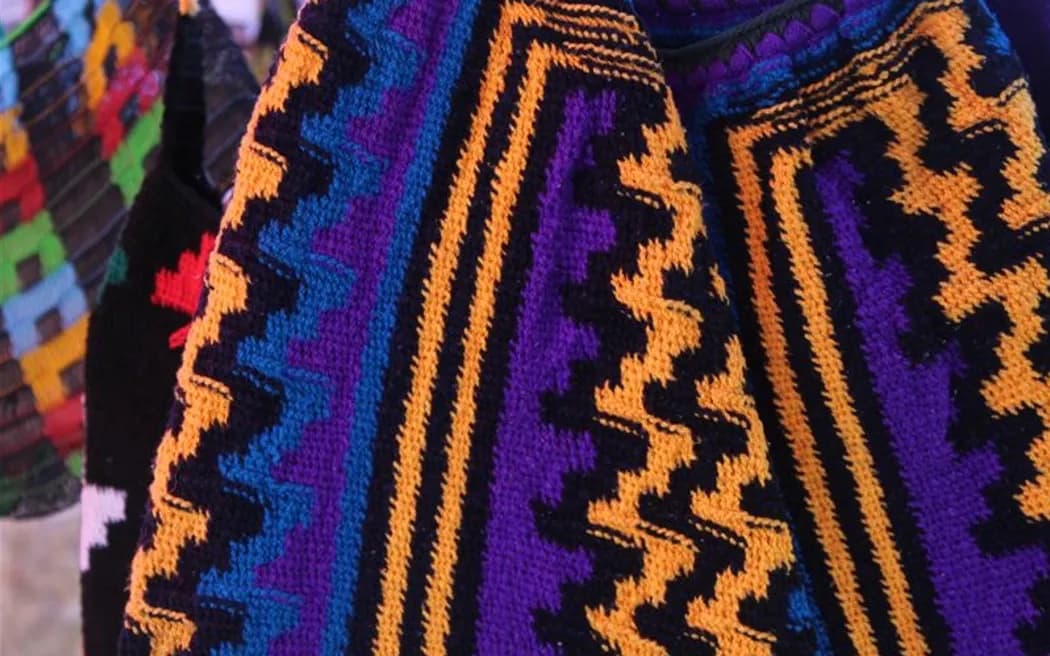
Synthetic wool and plastic have replaced plant fibre in many cultures, but the art of bium making remain as vibrant as ever. Photo: RNZ Pacific / Scott Waide
Materials, status, and ceremony
In Enga Province, the general term nuu expands into a layered system shaped by both purpose and material.
"A bridal bilum is called yari nuu. An old bilum is nuu arigi. A baby bilum is wane nuu, and a woman's everyday bilum is enda nuu," says Jenny Panapen.
Materials reinforce meaning.
"Bilums made from cuscus fur are saairi nuu. Bark-fibre bilums are kupi nuu. Those made from pandanus-type plants are called anga nuu."
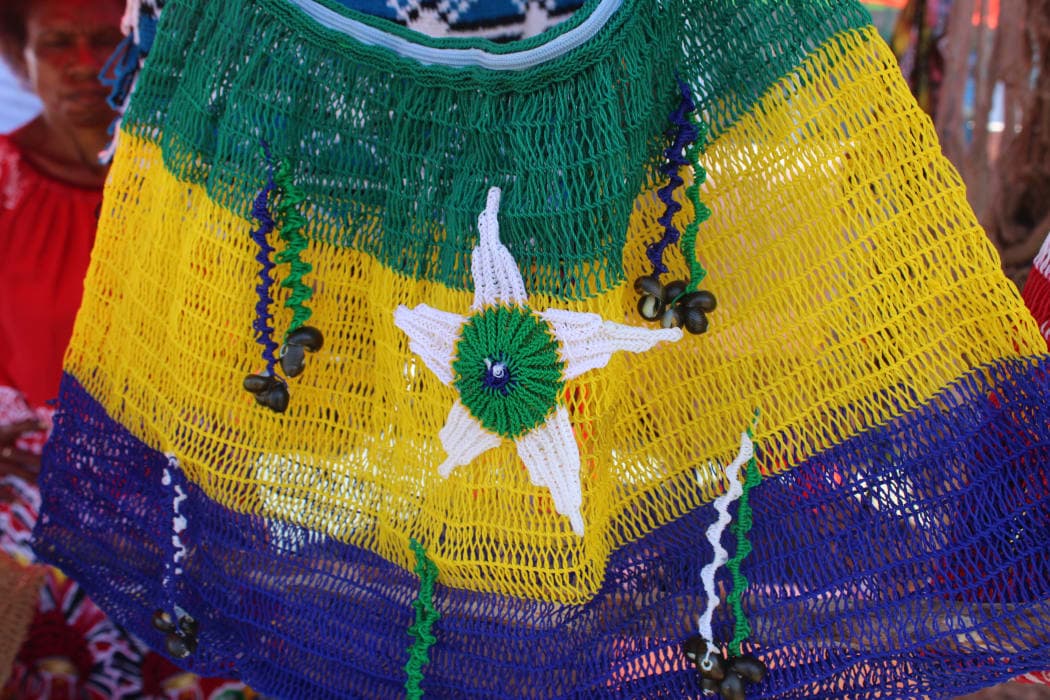
A plastic string bilum with Morobe Provincial flag colours Photo: RNZ Pacific / Scott Waide
In ceremonial settings, these distinctions are practical markers of obligation and status, guiding what may be carried and by whom.
Similar systems appear in Morobe Province, where Selepet-speaking communities refer to the bilum as iri or ito. In the mountainous Kabwum area, everyday bilums used by men and women are known as itokat or irikat.
Baby carriers are strictly identified as nganga ito or nganga iri, while large, heavy-duty bilums used for transporting food and firewood are called ito or iri hambonge.
Further down the Markham Valley, Atzera speakers use the general term tayap, with tayap nam reserved for carrying food. Across these communities, naming clarifies use and prevents misuse.
Regulation and authority
In East Sepik, the bilum's regulatory role becomes explicit. Vincencia Yinikanji, from the Ambunti-Dreikikir area, explains that in her father's Apwengohowei language, the bilum is known as kowe, with further names distinguishing food, travel, and baby bilums.
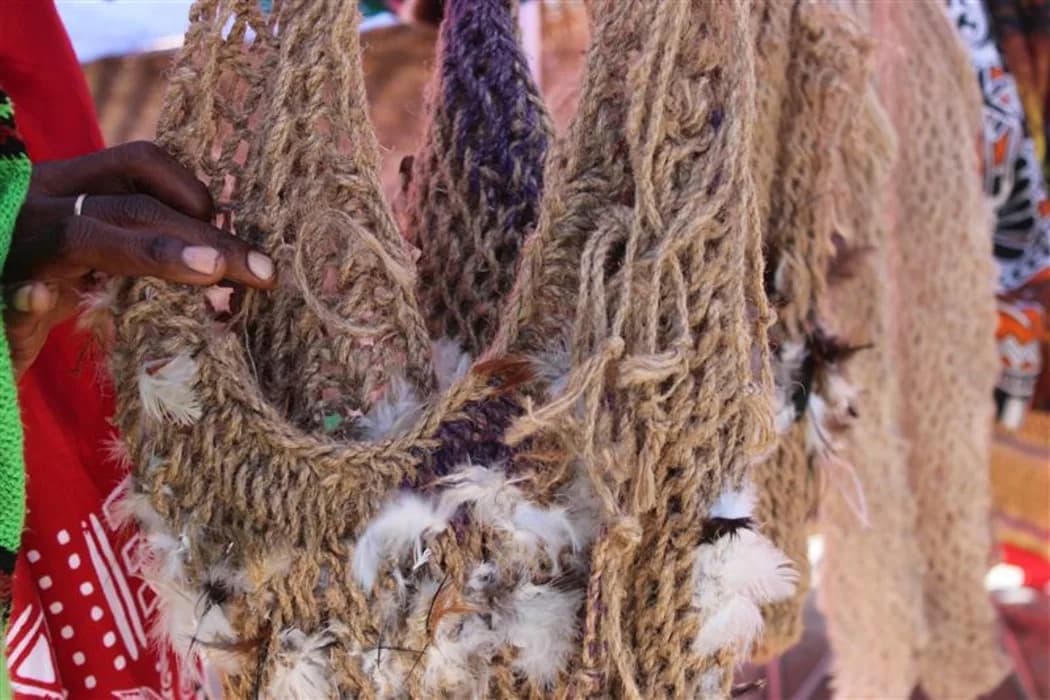
Chicken feathers woven into plant fire bilum from Boana, Morobe Province. Bilum making is as diverse as the languages of PNG. Photo: RNZ Pacific / Scott Waide
Some kowe are restricted forms of cultural authority.
"They are not just bags, but 'books' that hold the stories, histories, and social status of my community."
If such bilums appear on the wrong person, they may be removed publicly or returned. Authority is enforced through recognition rather than writing, with legitimacy woven directly into fibre.
Intimacy and the life cycle
This authority exists alongside intimacy. Across regions, bilums remain closely tied to the life cycle, particularly childbirth and caregiving.
In Central Province, the sanctity of baby bilums is carefully maintained.
"A bilum used for babies can never be used for anything else," says Maggie Aisaisa of the Mekeo people.
The rule reflects lived practice rather than symbolism. Baby bilums regulate closeness, warmth, and rhythm, shaping early experience long before language is learned.
Work, income, and adaptation
Today, bilums are also economic assets. They are sold in markets, commissioned for ceremonies, produced for church groups, and exchanged between families. For many women and young people, bilum-making provides income rooted in cultural knowledge.
Materials have shifted. Bark fibre and pandanus are often replaced with store-bought string and wool. Colours are brighter. Production is faster. Yet naming systems and usage rules continue to anchor meaning.
Vincencia Yinikanji notes that bilum-making remains a site of learning and pride, particularly for young girls acquiring skills from older women.
Carrying meaning forward
As bilums move into new spaces - fashion, social media, urban workplaces, and commercial markets - questions of meaning inevitably follow. Across regions and languages, however, one point remains consistent.
What matters most is not the fibre.
It is the knowledge carried with it: the names that instruct use, the rules that regulate authority, and the stories embedded in pattern and form. In a country that has long held knowledge in objects, performance, and relationships, the bilum remains one of the most reliable places to find it - not preserved behind glass, but carried daily, understood in context, and woven into life.